Grow your business

with Kitzone

kitzone banner

Frequently Asked Questions

Welcome to our Frequently Asked Questions section. Here you will find clear answers about Kitzone’s services, account setup, and features. We’ve gathered the most common queries to help you quickly understand how Kitzone works.
If your question is not listed here or you need further assistance, please feel free to contact our support team.

FAQ

What is Kitzone ?

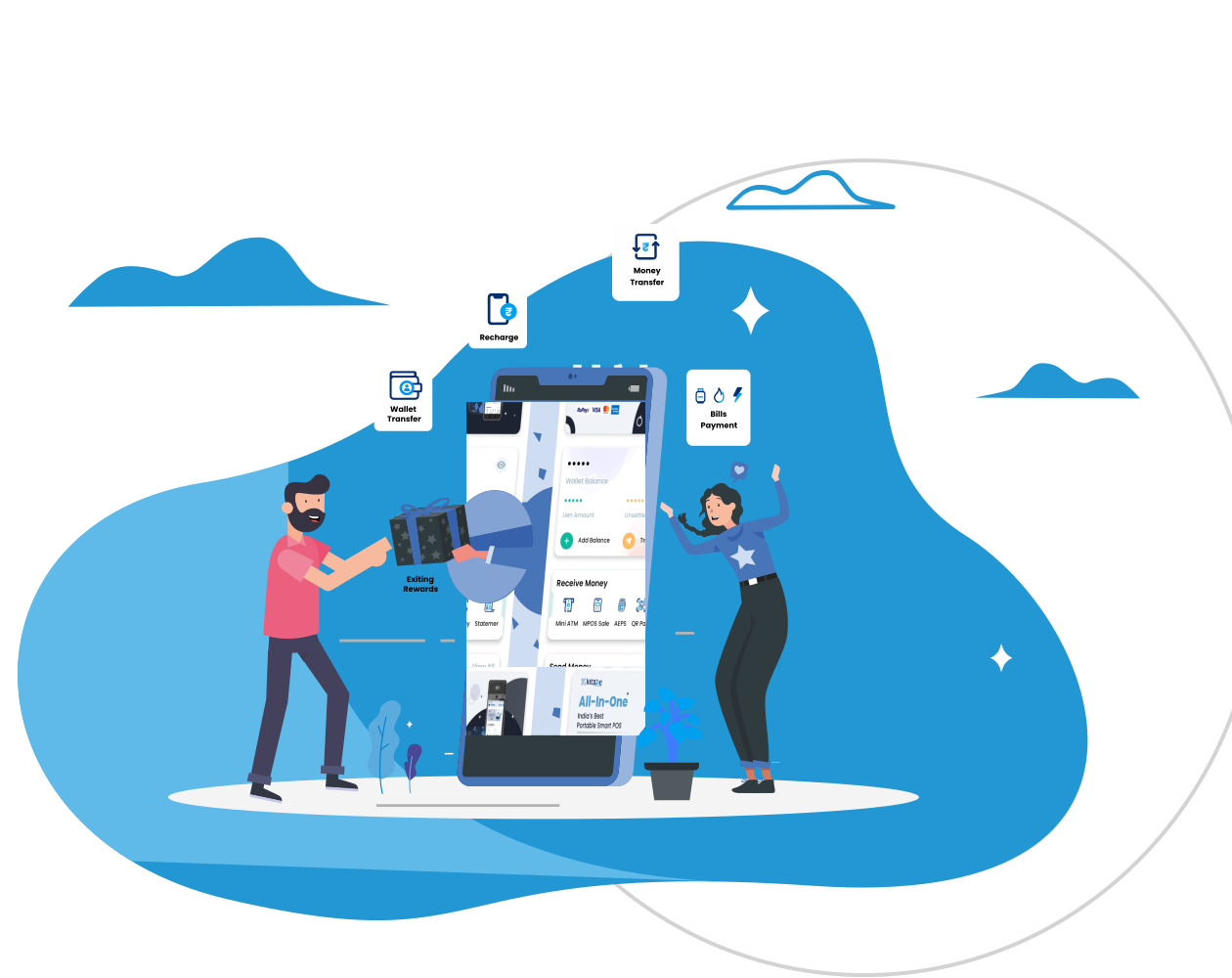
Kitzone is a digital Neo bank.Kitzone does not have any physical branch all work in kitzone is done online.Kitzone digital payment app makes it secure and seamless to pay using UPI, make bill payments, recharge mobiles, DTH, data card, Sound box, Prepaid card & Metro Card etc.

What is On-US Transaction

An "on-us" transaction refers to a financial transaction where both the sender and recipient hold accounts at the same bank or financial institution. In other words, the transaction occurs entirely within the same bank, without involving external networks or intermediaries.

Examples of on-us transactions include:

  1. Transferring funds between two accounts held by the same person at the same bank.
  2. Paying a bill or making a payment to someone who also banks at the same institution.

On-us transactions are typically faster and less expensive than transactions that involve external networks, such as wire transfers or payments to accounts at other banks.

What is Off-US Transaction

An "off-us" transaction, also known as an "away transaction" or "network transaction", refers to a financial transaction where the sender and recipient hold accounts at different banks or financial institutions. This means that the transaction involves external networks or intermediaries to facilitate the transfer of funds.

Examples of off-us transactions include:

  1. Transferring funds from an account at Bank A to an account at Bank B.
  2. Paying a bill or making a payment to someone who banks at a different institution.
  3. Using a debit or credit card to make a purchase from a merchant who banks at a different institution.

Off-us transactions typically involve additional processing steps, such as routing through payment networks (e.g., Visa, Mastercard, or ACH), which can lead to:

  • Longer processing times
  • Higher fees
  • Increased complexity

In contrast, on-us transactions occur entirely within the same bank, making them generally faster and less expensive.

What is quick Pay

Quick Pay is a payment service that allows users to send and receive money electronically, typically through a mobile app or online platform. It's designed for fast and convenient transactions, often using mobile numbers or email addresses to identify recipients.

Quick Pay services usually offer features like:

  1. Instant or near-instant transfers.
  2. Easy registration and setup.
  3. Simple recipient identification (using mobile numbers or email).
  4. Low or no fees for transactions.
  5. Integration with existing bank accounts or payment methods.

What is AEPS?

AEPS (Aadhaar Enabled Payment System) is a payment service in India that allows users to make financial transactions using their Aadhaar number, which is a unique 12-digit identification number issued to Indian citizens.

AEPS enables users to:

  1. Withdraw cash
  2. Deposit cash
  3. Make payments
  4. Check account balances

using their Aadhaar number and biometric authentication (fingerprint or iris scan).

AEPS transactions are typically done through a Micro-ATM or a Point of Sale (PoS) device, and the service is often used for:

  1. Government benefit transfers.
  2. Subsidy payments.
  3. Rural banking services.
  4. Financial inclusion initiatives.

AEPS aims to increase financial accessibility and inclusion, especially in rural and underserved areas, by leveraging the widespread adoption of Aadhaar. It provides a convenient, secure, and efficient way to make transactions, reducing reliance on physical cards or accounts.